Spark shuffle
spark shuffle模块与hadoop的map-reduce模块功能类似,都是为了完成数据的洗牌,即要为每个分区的数据改变分区规则,重新分配分区。常见在诸如groupByKey,reduceByKey,repartition,join等操作都会触发shuffle过程。Spark的stage也是按照是否存在shuffle来划分的。当出现shuffle时,下游动作必须等到上游任务完成后才能执行。
一个shuffle的操作可以分为两个阶段,即map阶段和reduce阶段。
在map阶段,executor将其所管理的分区数据根据指定的分区规则重新分区,并将中间结果输出到本地文件中,并将输出结果信息上报给driver节点。
在reduce阶段,executor首先从driver节点获取到当前shuffle阶段所需要的中间文件在集群上的位置,然后向保存中间文件的节点请求获取中间结果文件,在进行相关处理(如聚合,排序)将数据返回给调用者,供调用者使用。
1. Shuffle结构
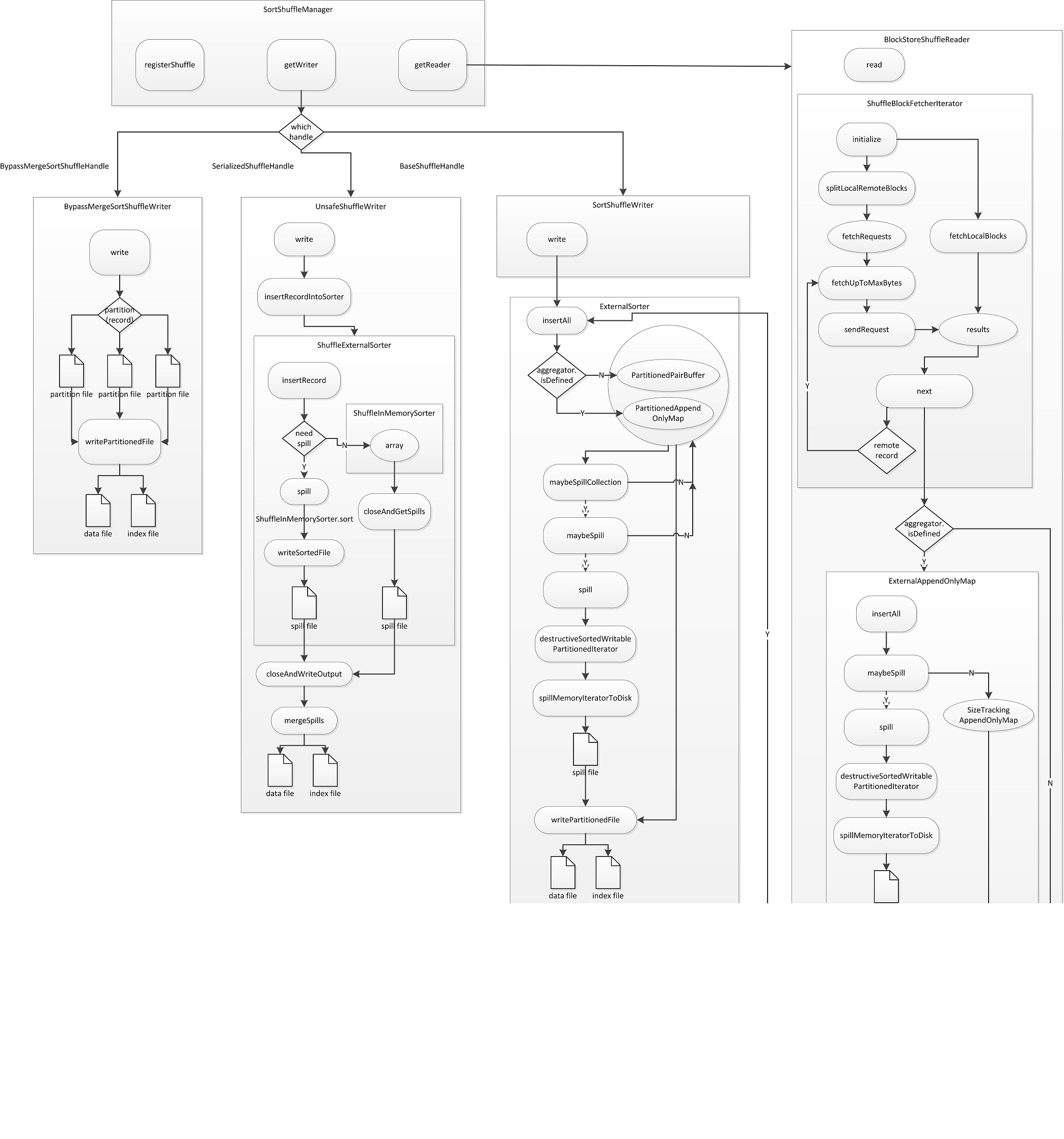
2. SortShuffleManager
在Spark 1.6.1中,SortShuffleManager是ShuffleManager的唯一子类,负责实现shuffle阶段的管理。主要包括getWriter,getReader,registerShuffle,unregisterShuffle等方法供map和reduce阶段使用。
在SortShuffleManager中,输入的记录会根据shuffle的分区规则将记录分配到对应的分区上,最终会将结果输出到一个map输出文件中,文件中的记录按照分区ID从小到大排序。每一个map输出文件对应一个分区索引文件,记录每个分区在文件中的偏移量。reduce任务会根据分区索引文件在map输出文件中找到需要分区的记录。当记录过多,不能在内存中装下时,会将内存中的记录临时刷新到磁盘上,这些临时文件最终会合成一个map输出文件。
registerShuffle
向SortShuffleManager注册一个shuffle,并获取对应的writer handler。
当前一共有三种类型的handler:BypassMergeSortShuffleHandle,SerializedShuffleHandle,BaseShuffleHandle,不同的handle在map阶段调用的writer不同,不同的writer在map时有不同的处理逻辑(如是否对每个分区中的记录进行聚合)
- BypassMergeSortShuffleHandle :不对shuffle后分区的记录进行聚合,对应writer BypassMergeSortShuffleWriter 只是简单的将输入记录输出到shuffle后对应的reduce分区文件中,最终将所有的分区文件合并成一个map输出文件。由于这个handle对应的writer会为每一个输入的分区建立一个临时文件,所以当输入分区很多时,会存在性能问题,所以使用BypassMergeSortShuffleHandle需要输入的分区数量小于 spark.shuffle.sort.bypassMergeThreshold 配置的大小(默认为200)。
- SerializedShuffleHandle:在不对输入记录进行反序列化的情况下,可以将记录按照shuffle后的reduce分区进行排序,并最终输出到一个map输出文件中。对应 UnsafeShuffleWriter。
- BaseShuffleHandle:如果需要对输入记录进行聚合,则使用这个方法将输入记录最终按照shuffle后的reduce分区id排序,每个分区中按照记录key的hash值进行排序。对应的writer为 SortShuffleWriter。
1
2
3
4
5
6
7
8
9
10
11
12
13
14
15
16
17
18
19
20
21
22
23
24
25
26
27
28
29
30
31
32
33
34
35
36
37
38
39
40
41
42
43
44
45
46
47
48
49
50
51
52
53
54
55
56
57
58
59
60
61
62
63
64
65
66
67
68
69
70
71
72
73
74
75
76
77
78
79
80
81
82
83
84
85
86
87
88
89
90
91
92
93
|
override def registerShuffle[K, V, C](
shuffleId: Int,
numMaps: Int,
dependency: ShuffleDependency[K, V, C]): ShuffleHandle = {
if (SortShuffleWriter.shouldBypassMergeSort(SparkEnv.get.conf, dependency)) {
new BypassMergeSortShuffleHandle[K, V](
shuffleId, numMaps, dependency.asInstanceOf[ShuffleDependency[K, V, V]])
} else if (SortShuffleManager.canUseSerializedShuffle(dependency)) {
new SerializedShuffleHandle[K, V](
shuffleId, numMaps, dependency.asInstanceOf[ShuffleDependency[K, V, V]])
} else {
new BaseShuffleHandle(shuffleId, numMaps, dependency)
}
}
|
getWriter
根据上文在向shuffleManager注册时返回给调用者的handle,来决定返回给调用者什么类型的writer来将输入记录输出到map输出文件中。
1
2
3
4
5
6
7
8
9
10
11
12
13
14
15
16
17
18
19
20
21
22
23
24
25
26
27
28
29
30
31
32
33
34
35
36
37
38
39
40
41
42
43
44
45
46
47
48
49
50
51
52
53
54
55
56
57
58
59
60
61
62
63
64
65
66
67
68
69
70
71
72
73
74
75
76
77
78
79
80
81
82
83
84
85
86
87
88
89
90
91
92
93
94
95
96
97
98
99
100
101
102
103
104
105
106
107
108
109
110
111
112
113
114
115
116
117
118
119
120
121
122
123
124
125
126
127
128
129
130
131
132
133
|
override def getWriter[K, V](
handle: ShuffleHandle,
mapId: Int,
context: TaskContext): ShuffleWriter[K, V] = {
numMapsForShuffle.putIfAbsent(
handle.shuffleId, handle.asInstanceOf[BaseShuffleHandle[_, _, _]].numMaps)
val env = SparkEnv.get
handle match {
case unsafeShuffleHandle: SerializedShuffleHandle[K @unchecked, V @unchecked] =>
new UnsafeShuffleWriter(
env.blockManager,
shuffleBlockResolver.asInstanceOf[IndexShuffleBlockResolver],
context.taskMemoryManager(),
unsafeShuffleHandle,
mapId,
context,
env.conf)
case bypassMergeSortHandle: BypassMergeSortShuffleHandle[K @unchecked, V @unchecked] =>
new BypassMergeSortShuffleWriter(
env.blockManager,
shuffleBlockResolver.asInstanceOf[IndexShuffleBlockResolver],
bypassMergeSortHandle,
mapId,
context,
env.conf)
case other: BaseShuffleHandle[K @unchecked, V @unchecked, _] =>
new SortShuffleWriter(shuffleBlockResolver, other, mapId, context)
}
}
|
getReader
executor上的reduce任务调用此方法来获取map输出的数据。实际是返回一个BlockStoreShuffleReader实例。
1
2
3
4
5
6
7
8
9
10
11
12
13
14
15
16
17
18
19
20
21
22
23
24
25
26
27
28
29
30
31
32
33
34
35
36
37
38
39
40
41
|
override def getReader[K, C](
handle: ShuffleHandle,
startPartition: Int,
endPartition: Int,
context: TaskContext): ShuffleReader[K, C] = {
new BlockStoreShuffleReader(
handle.asInstanceOf[BaseShuffleHandle[K, _, C]], startPartition, endPartition, context)
}
|
unregisterShuffle
1
2
3
4
5
6
7
8
9
10
11
12
13
14
15
16
17
18
19
20
21
22
23
24
25
26
27
28
29
30
31
32
33
34
35
36
37
|
override def unregisterShuffle(shuffleId: Int): Boolean = {
Option(numMapsForShuffle.remove(shuffleId)).foreach { numMaps =>
(0 until numMaps).foreach { mapId =>
shuffleBlockResolver.removeDataByMap(shuffleId, mapId)
}
}
true
}
|
ShuffleWriter
spark使用ShuffleWriter在map阶段将记录按照shuffle的分区输出到map文件中,供reduce阶段的任务来使用。ShuffleWriter在1.6.1版本中存在三个实现类:BypassMergeSortWriter(简单的建立shuffle分区数量个文件,将记录按shuffle后的reduce分区输出到对应的文件中,最后在合并成一个map文件),UnsafeShuffleWriter(直接将记录按照序列化的方式进行shuffle分区,并最终输出到map文件中),SortShuffleWriter(在map阶段对记录进行聚合,并最终输出到map文件中)。
ShuffleWriter抽象类有两个方法:
1
2
3
4
5
6
7
8
9
10
11
12
13
14
15
16
17
18
19
20
21
|
@throws[IOException]
def write(records: Iterator[Product2[K, V]]): Unit
def stop(success: Boolean): Option[MapStatus]
|
BypassMergeSortShuffleWriter
这个writer在写记录前,根据reduce分区数量,打开reduce分区数量个临时文件。根据reduce分区不同,将记录写入对应的临时文件中,然后将这些文件进行合并,输出到一个map文件中供reduce阶段使用。由于这个writer直接将记录写入对应的分区临时文件,所以记录不会在内存中缓存。如果shuffle后存在大量的reduce分区,则由于这个writer会为每一个reduce分区打开一个文件,所以在reduce分区众多时不会很高效。
这个writer只会在如下条件全部满足时才会被使用:
- 输入的rdd没有Ordering方法被指定
- 输入的rdd没有aggregator方法被指定
- 输入的rdd的分区数小于bypassMergeThreshold
write & writePartitionedFile
将输入的记录按照reduce分区进行排序并写入到输出的map文件中。
1
2
3
4
5
6
7
8
9
10
11
12
13
14
15
16
17
18
19
20
21
22
23
24
25
26
27
28
29
30
31
32
33
34
35
36
37
38
39
40
41
42
43
44
45
46
47
48
49
50
51
52
53
54
55
56
57
58
59
60
61
62
63
64
65
66
67
68
69
70
71
72
73
74
75
76
77
78
79
80
81
82
83
84
85
86
87
88
89
90
91
92
93
94
95
96
97
98
99
100
101
102
103
104
105
106
107
108
109
110
111
112
113
114
115
116
117
118
119
120
121
122
123
124
125
126
127
128
129
130
131
132
133
134
135
136
137
138
139
140
141
142
143
144
145
146
147
148
149
150
151
152
153
154
155
156
157
158
159
160
161
162
163
164
165
166
167
168
169
170
171
172
173
174
175
176
177
178
179
180
181
182
183
184
185
186
187
188
189
190
191
192
193
194
195
196
197
198
199
200
201
202
203
204
205
206
207
208
209
210
211
212
213
214
215
216
217
218
219
220
221
222
223
224
225
226
227
228
229
230
231
232
233
234
235
236
237
238
239
240
241
242
243
244
245
246
247
248
249
250
251
252
253
254
255
256
257
258
259
260
261
262
263
264
265
266
267
268
269
270
271
272
273
274
275
276
277
278
279
280
281
282
283
284
285
286
287
288
289
290
291
292
293
294
295
296
297
298
299
300
301
302
303
304
305
306
307
308
309
|
public void write(Iterator<Product2<K, V>> records) throws IOException {
assert (partitionWriters == null);
if (!records.hasNext()) {
partitionLengths = new long[numPartitions];
shuffleBlockResolver.writeIndexFileAndCommit(shuffleId, mapId, partitionLengths, null);
mapStatus = MapStatus$.MODULE$.apply(blockManager.shuffleServerId(), partitionLengths);
return;
}
final SerializerInstance serInstance = serializer.newInstance();
final long openStartTime = System.nanoTime();
partitionWriters = new DiskBlockObjectWriter[numPartitions];
for (int i = 0; i < numPartitions; i++) {
final Tuple2<TempShuffleBlockId, File> tempShuffleBlockIdPlusFile =
blockManager.diskBlockManager().createTempShuffleBlock();
final File file = tempShuffleBlockIdPlusFile._2();
final BlockId blockId = tempShuffleBlockIdPlusFile._1();
partitionWriters[i] =
blockManager.getDiskWriter(blockId, file, serInstance, fileBufferSize, writeMetrics);
}
writeMetrics.incWriteTime(System.nanoTime() - openStartTime);
while (records.hasNext()) {
final Product2<K, V> record = records.next();
final K key = record._1();
partitionWriters[partitioner.getPartition(key)].write(key, record._2());
}
for (DiskBlockObjectWriter writer : partitionWriters) {
writer.commitAndClose();
}
File output = shuffleBlockResolver.getDataFile(shuffleId, mapId);
File tmp = Utils.tempFileWith(output);
partitionLengths = writePartitionedFile(tmp);
shuffleBlockResolver.writeIndexFileAndCommit(shuffleId, mapId, partitionLengths, tmp);
mapStatus = MapStatus$.MODULE$.apply(blockManager.shuffleServerId(), partitionLengths);
}
private long[] writePartitionedFile(File outputFile) throws IOException {
final long[] lengths = new long[numPartitions];
if (partitionWriters == null) {
return lengths;
}
final FileOutputStream out = new FileOutputStream(outputFile, true);
final long writeStartTime = System.nanoTime();
boolean threwException = true;
try {
for (int i = 0; i < numPartitions; i++) {
final File file = partitionWriters[i].fileSegment().file();
if (file.exists()) {
final FileInputStream in = new FileInputStream(file);
boolean copyThrewException = true;
try {
lengths[i] = Utils.copyStream(in, out, false, transferToEnabled);
copyThrewException = false;
} finally {
Closeables.close(in, copyThrewException);
}
if (!file.delete()) {
logger.error("Unable to delete file for partition {}", i);
}
}
}
threwException = false;
} finally {
Closeables.close(out, threwException);
writeMetrics.incWriteTime(System.nanoTime() - writeStartTime);
}
partitionWriters = null;
return lengths;
}
|
UnsafeShuffleWriter
UnsafeShuffleWriter包含一个排序类 ShuffleExternalSorter。UnsafeShuffleWriter都是使用这个类来插入数据。
write方法实际会调用 ShuffleExternalSorter 的 insertRecode 方法来插入记录。
write & closeAndWriteOutput
将输入的记录按照shuffle的给定的分区方法进行分区,然后按照分区的id进行排序并输出到map文件中。
1
2
3
4
5
6
7
8
9
10
11
12
13
14
15
16
17
18
19
20
21
22
23
24
25
26
27
28
29
30
31
32
33
34
35
36
37
38
39
40
41
42
43
44
45
46
47
48
49
50
51
52
53
54
55
56
57
58
59
60
61
62
63
64
65
66
67
68
69
70
71
72
73
74
75
76
77
78
79
80
81
82
83
84
85
86
87
88
89
90
91
92
93
94
95
96
97
98
99
100
101
102
103
104
105
106
107
108
109
110
111
112
113
114
115
116
117
118
119
120
121
122
123
124
125
126
127
128
129
130
131
132
133
134
135
136
137
138
139
140
141
142
143
144
145
146
147
148
149
150
151
152
153
154
155
156
157
158
159
160
161
162
| @Override
public void write(scala.collection.Iterator<Product2<K, V>> records) throws IOException {
boolean success = false;
try {
while (records.hasNext()) {
insertRecordIntoSorter(records.next());
}
closeAndWriteOutput();
success = true;
} finally {
}
}
void closeAndWriteOutput() throws IOException {
assert(sorter != null);
updatePeakMemoryUsed();
serBuffer = null;
serOutputStream = null;
final SpillInfo[] spills = sorter.closeAndGetSpills();
sorter = null;
final long[] partitionLengths;
final File output = shuffleBlockResolver.getDataFile(shuffleId, mapId);
final File tmp = Utils.tempFileWith(output);
try {
partitionLengths = mergeSpills(spills, tmp);
} finally {
for (SpillInfo spill : spills) {
if (spill.file.exists() && ! spill.file.delete()) {
logger.error("Error while deleting spill file {}", spill.file.getPath());
}
}
}
shuffleBlockResolver.writeIndexFileAndCommit(shuffleId, mapId, partitionLengths, tmp);
mapStatus = MapStatus$.MODULE$.apply(blockManager.shuffleServerId(), partitionLengths);
}
|
ShuffleExternalSorter
ShuffleExternalSorter用来将UnsafeShuffleWriter输入的记录保存并进行排序。输入的记录会首先被保存到内存的数据页中,当所有记录被插入或当前线程所使用的内存达到上限时,将内存页数据按照分区id进行排序后(使用ShuffleInMemorySorter方法),spill到磁盘中。
此sorter与SortShuffleWriter所使用的ExternalSorter不同,这个sorter不负责spill文件的合并,具体的合并操作由UnsafeShuffleWriter实现。UnsafeShuffleWriter支持直接对序列化的数据进行合并,从而避免了额外的序列化/反序列化操作。
这个类继承自MemoryConsumer,所以其所使用的内存来自execution memory,内存由TaskMemoryManager管理。当内存不足时,TaskMemoryManager会调用ShuffleExternalSorter的spill方法将记录刷新到磁盘上。
insertRecord
UnsafeShuffleWriter中的writer方法调用ShuffleExternalSorter中的insertRecord方法将数据写入。insertRecord实际调用ShuffleInMemorySorter中的insertRecord方法实际写入数据。
1
2
3
4
5
6
7
8
9
10
11
12
13
14
15
16
17
18
19
20
21
22
23
24
25
26
27
28
29
30
31
32
33
34
35
36
37
38
39
40
41
42
43
44
45
46
47
48
49
50
51
52
53
54
55
56
57
58
59
60
61
62
63
64
65
66
67
68
69
70
71
72
73
74
75
76
77
78
79
80
81
82
83
84
85
86
87
88
89
90
91
92
93
94
95
96
97
98
99
100
101
102
103
104
105
106
107
108
109
|
public void insertRecord(Object recordBase, long recordOffset, int length, int partitionId)
throws IOException {
assert(inMemSorter != null);
if (inMemSorter.numRecords() > numElementsForSpillThreshold) {
spill();
}
growPointerArrayIfNecessary();
final int required = length + 4;
acquireNewPageIfNecessary(required);
assert(currentPage != null);
final Object base = currentPage.getBaseObject();
final long recordAddress = taskMemoryManager.encodePageNumberAndOffset(currentPage, pageCursor);
Platform.putInt(base, pageCursor, length);
pageCursor += 4;
Platform.copyMemory(recordBase, recordOffset, base, pageCursor, length);
pageCursor += length;
inMemSorter.insertRecord(recordAddress, partitionId);
}
|
spill & writeSortedFile
当内存不足时,ShuffleExternalSorter会调用spill方法将内存中数据刷新到磁盘中。spill实际会调用writeSortedFile方法,首先将内存页中的数据按照reduce分区id进行排序(由ShuffleMemorySorter完成),然后输出到磁盘文件中。
1
2
3
4
5
6
7
8
9
10
11
12
13
14
15
16
17
18
19
20
21
22
23
24
25
26
27
28
29
30
31
32
33
34
35
36
37
38
39
40
41
42
43
44
45
46
47
48
49
50
51
52
53
54
55
56
57
58
59
60
61
62
63
64
65
66
67
68
69
70
71
72
73
74
75
76
77
78
79
80
81
82
83
84
85
86
87
88
89
90
91
92
93
94
95
96
97
98
99
100
101
102
103
104
105
106
107
108
109
110
111
112
113
114
115
116
117
118
119
120
121
122
123
124
125
126
127
128
129
130
131
132
133
134
135
136
137
138
139
140
141
142
143
144
145
146
147
148
149
150
151
152
153
154
155
156
157
158
159
160
161
162
163
164
165
166
167
168
169
170
171
172
173
174
175
176
177
178
179
180
181
182
183
184
185
186
187
188
189
190
191
192
193
194
195
196
197
198
199
200
201
202
203
204
205
206
207
208
209
210
211
212
213
214
215
216
217
218
219
220
221
222
223
224
225
226
227
228
229
230
231
232
233
234
235
236
237
238
239
240
241
242
243
244
245
246
247
248
249
250
251
252
253
254
255
256
257
258
259
260
261
262
263
264
265
266
267
268
269
270
271
272
273
274
275
276
277
278
279
280
281
282
283
284
285
286
287
288
289
290
291
292
293
294
295
296
297
298
299
300
301
302
303
304
305
306
307
308
309
310
311
312
313
314
315
316
317
318
319
320
321
322
323
324
325
326
327
328
329
330
331
332
333
334
335
336
337
338
339
340
341
342
343
344
345
346
347
348
349
350
351
352
353
354
355
356
357
358
359
360
361
362
363
364
365
366
367
368
369
370
|
@Override
public long spill(long size, MemoryConsumer trigger) throws IOException {
writeSortedFile(false);
final long spillSize = freeMemory();
inMemSorter.reset();
return spillSize;
}
private void writeSortedFile(boolean isLastFile) throws IOException {
final ShuffleInMemorySorter.ShuffleSorterIterator sortedRecords =
inMemSorter.getSortedIterator();
DiskBlockObjectWriter writer;
final byte[] writeBuffer = new byte[DISK_WRITE_BUFFER_SIZE];
final Tuple2<TempShuffleBlockId, File> spilledFileInfo =
blockManager.diskBlockManager().createTempShuffleBlock();
final File file = spilledFileInfo._2();
final TempShuffleBlockId blockId = spilledFileInfo._1();
final SpillInfo spillInfo = new SpillInfo(numPartitions, file, blockId);
final SerializerInstance ser = DummySerializerInstance.INSTANCE;
writer = blockManager.getDiskWriter(blockId, file, ser, fileBufferSizeBytes, writeMetricsToUse);
int currentPartition = -1;
while (sortedRecords.hasNext()) {
sortedRecords.loadNext();
final int partition = sortedRecords.packedRecordPointer.getPartitionId();
assert (partition >= currentPartition);
if (partition != currentPartition) {
if (currentPartition != -1) {
writer.commitAndClose();
spillInfo.partitionLengths[currentPartition] = writer.fileSegment().length();
}
currentPartition = partition;
writer =
blockManager.getDiskWriter(blockId, file, ser, fileBufferSizeBytes, writeMetricsToUse);
}
final long recordPointer = sortedRecords.packedRecordPointer.getRecordPointer();
final Object recordPage = taskMemoryManager.getPage(recordPointer);
final long recordOffsetInPage = taskMemoryManager.getOffsetInPage(recordPointer);
int dataRemaining = Platform.getInt(recordPage, recordOffsetInPage);
long recordReadPosition = recordOffsetInPage + 4;
while (dataRemaining > 0) {
final int toTransfer = Math.min(DISK_WRITE_BUFFER_SIZE, dataRemaining);
Platform.copyMemory(
recordPage, recordReadPosition, writeBuffer, Platform.BYTE_ARRAY_OFFSET, toTransfer);
writer.write(writeBuffer, 0, toTransfer);
recordReadPosition += toTransfer;
dataRemaining -= toTransfer;
}
writer.recordWritten();
}
if (writer != null) {
writer.commitAndClose();
if (currentPartition != -1) {
spillInfo.partitionLengths[currentPartition] = writer.fileSegment().length();
spills.add(spillInfo);
}
}
}
}
|
ShuffleInMemorySorter
ShuffleInMemorySorter实际用来保存输入记录在内存页中的指针,并对输入的记录进行排序,支持基数排序和timsort排序两种排序方法,默认使用基数排序。
insertRecord
使用数组来保存输入记录以及其所在reduce分区id的指针(由PackedRecordPointer封装)。
1
2
3
4
5
6
7
8
9
10
11
12
13
14
15
16
17
18
19
20
21
22
23
24
25
| public void insertRecord(long recordPointer, int partitionId) {
if (!hasSpaceForAnotherRecord()) {
throw new IllegalStateException("There is no space for new record");
}
array.set(pos, PackedRecordPointer.packPointer(recordPointer, partitionId));
pos++;
}
|
getSortedIterator
对内存中的数据进行排序,并返回iterator。
1
2
3
4
5
6
7
8
9
10
11
12
13
14
15
16
17
18
19
20
21
22
23
24
25
26
27
28
29
30
31
32
33
34
35
36
37
38
39
40
41
42
43
44
45
46
47
48
49
50
51
52
53
54
55
56
57
58
59
60
61
62
63
64
65
66
67
68
69
70
71
72
73
74
75
76
77
78
79
80
81
82
83
84
85
86
87
88
89
90
91
92
93
94
95
96
97
|
public ShuffleSorterIterator getSortedIterator() {
int offset = 0;
if (useRadixSort) {
offset = RadixSort.sort(
array, pos,
PackedRecordPointer.PARTITION_ID_START_BYTE_INDEX,
PackedRecordPointer.PARTITION_ID_END_BYTE_INDEX, false, false);
} else {
MemoryBlock unused = new MemoryBlock(
array.getBaseObject(),
array.getBaseOffset() + pos * 8L,
(array.size() - pos) * 8L);
LongArray buffer = new LongArray(unused);
Sorter<PackedRecordPointer, LongArray> sorter =
new Sorter<>(new ShuffleSortDataFormat(buffer));
sorter.sort(array, 0, pos, SORT_COMPARATOR);
}
return new ShuffleSorterIterator(pos, array, offset);
}
|
SortShuffleWriter
SortShuffleWriter与BypassMergeSortShuffleWriter和UnsafeShuffleWriter最大的不同在于他可以在map阶段对输入的记录按照key hashcode进行聚合以及对分配到每个reduce分区里的记录按照key hashcode进行排序。SortShuffleWriter具体的排序方法委托给 ExternalSorter 这个排序器来完成。
write
1
2
3
4
5
6
7
8
9
10
11
12
13
14
15
16
17
18
19
20
21
22
23
24
25
26
27
28
29
30
31
32
33
34
35
36
37
38
39
40
41
42
43
44
45
46
47
48
49
50
51
52
53
54
55
56
57
58
59
60
61
62
63
64
65
66
67
68
69
70
71
72
73
74
75
76
77
78
79
80
81
82
83
84
85
86
87
88
89
90
91
92
93
94
95
96
97
98
99
100
101
102
103
104
105
106
107
108
109
110
111
112
113
|
override def write(records: Iterator[Product2[K, V]]): Unit = {
sorter = if (dep.mapSideCombine) {
require(dep.aggregator.isDefined, "Map-side combine without Aggregator specified!")
new ExternalSorter[K, V, C](
context, dep.aggregator, Some(dep.partitioner), dep.keyOrdering, dep.serializer)
} else {
new ExternalSorter[K, V, V](
context, aggregator = None, Some(dep.partitioner), ordering = None, dep.serializer)
}
sorter.insertAll(records)
val output = shuffleBlockResolver.getDataFile(dep.shuffleId, mapId)
val tmp = Utils.tempFileWith(output)
val blockId = ShuffleBlockId(dep.shuffleId, mapId, IndexShuffleBlockResolver.NOOP_REDUCE_ID)
val partitionLengths = sorter.writePartitionedFile(blockId, tmp)
shuffleBlockResolver.writeIndexFileAndCommit(dep.shuffleId, mapId, partitionLengths, tmp)
mapStatus = MapStatus(blockManager.shuffleServerId, partitionLengths)
}
|
ExternalSorter
ExternalSorter实现对输入记录的排序,以及按照key hashcode对记录按照给定的聚合函数进行聚合,对reduce分区内的按照key hashcode进行排序,并最终将结果输出到一个map文件中。
ExternalSorter内部有两种缓存数据结构:PartitionedAppendOnlyMap和PartitionedPairBuffer。如果需要在map阶段进行聚合排序操作,则使用PartitionedAppendOnlyMap,否则则使用PartitionedPairBuffer。在记录输入过程中,会不断向缓存中写入数据,如果缓存达到内存上限,则要将缓存中的内容spill到磁盘中。当调用者(SortShuffleWriter)请求输出文件时,则将spill到磁盘上的所有文件和缓存中剩余的记录进行合并,并以一个map文件的形式输出。
ExternalSorter继承自Spillable类,而Spillable继承自MemoryConsumer,所以ExternalSorter所使用的内存也都来自execution memory,由TaskMemoryManager管理。
insertAll
将输入记录写入sorter内存中,如果内存不足则将内存中记录spill到磁盘上,并清空内存。
1
2
3
4
5
6
7
8
9
10
11
12
13
14
15
16
17
18
19
20
21
22
23
24
25
26
27
28
29
30
31
32
33
34
35
36
37
38
39
40
41
42
43
44
45
46
47
48
49
50
51
52
53
54
55
56
57
58
59
60
61
62
63
64
65
66
67
68
69
70
71
72
73
74
75
76
77
78
79
80
81
82
83
84
85
86
87
88
89
90
91
92
93
94
95
96
97
98
99
100
101
102
103
104
105
106
107
108
109
110
111
112
113
114
115
116
117
118
119
120
121
122
123
124
125
| def insertAll(records: Iterator[Product2[K, V]]): Unit = {
val shouldCombine = aggregator.isDefined
if (shouldCombine) {
val mergeValue = aggregator.get.mergeValue
val createCombiner = aggregator.get.createCombiner
var kv: Product2[K, V] = null
val update = (hadValue: Boolean, oldValue: C) => {
if (hadValue) mergeValue(oldValue, kv._2) else createCombiner(kv._2)
}
while (records.hasNext) {
addElementsRead()
kv = records.next()
map.changeValue((getPartition(kv._1), kv._1), update)
maybeSpillCollection(usingMap = true)
}
} else {
while (records.hasNext) {
addElementsRead()
val kv = records.next()
buffer.insert(getPartition(kv._1), kv._1, kv._2.asInstanceOf[C])
maybeSpillCollection(usingMap = false)
}
}
}
|
maybeSpillCollection
使用预估当前缓存(map/buffer)已使用大小方法,判断是否超过内存上限,如果超过则将缓存中数据spill到磁盘中,并重置缓存。
1
2
3
4
5
6
7
8
9
10
11
12
13
14
15
16
17
18
19
20
21
22
23
24
25
26
27
28
29
30
31
32
33
34
35
36
37
38
39
40
41
42
43
44
45
46
47
48
49
50
51
52
53
54
55
56
57
58
59
60
61
62
63
64
65
66
67
68
69
70
71
72
73
74
75
76
77
78
79
80
81
82
83
84
85
86
87
88
89
90
91
92
93
|
private def maybeSpillCollection(usingMap: Boolean): Unit = {
var estimatedSize = 0L
if (usingMap) {
estimatedSize = map.estimateSize()
if (maybeSpill(map, estimatedSize)) {
map = new PartitionedAppendOnlyMap[K, C]
}
} else {
estimatedSize = buffer.estimateSize()
if (maybeSpill(buffer, estimatedSize)) {
buffer = new PartitionedPairBuffer[K, C]
}
}
if (estimatedSize > _peakMemoryUsedBytes) {
_peakMemoryUsedBytes = estimatedSize
}
}
|
Spillable.maybeSpill
ExternalSorter实际调用父类Spillable的maybeSpill方法在预估到map/buffer中内存不足时,尝试进行spill操作。在真正进行spill之前,会先尝试向TaskMemoryManager申请内存,如果申请内存后的缓存大小大于预估的使用大小,则不需要进行spill,否则进行实际的spill操作
1
2
3
4
5
6
7
8
9
10
11
12
13
14
15
16
17
18
19
20
21
22
23
24
25
26
27
28
29
30
31
32
33
34
35
36
37
38
39
40
41
42
43
44
45
46
47
48
49
50
51
52
53
54
55
56
57
58
59
60
61
62
63
64
65
66
67
68
69
70
71
72
73
74
75
76
77
78
79
80
81
82
83
84
85
86
87
88
89
90
91
92
93
94
95
96
97
98
99
100
101
102
103
104
105
106
107
108
109
110
111
112
113
|
protected def maybeSpill(collection: C, currentMemory: Long): Boolean = {
var shouldSpill = false
if (elementsRead % 32 == 0 && currentMemory >= myMemoryThreshold) {
val amountToRequest = 2 * currentMemory - myMemoryThreshold
val granted = acquireMemory(amountToRequest)
myMemoryThreshold += granted
shouldSpill = currentMemory >= myMemoryThreshold
}
shouldSpill = shouldSpill || _elementsRead > numElementsForceSpillThreshold
if (shouldSpill) {
_spillCount += 1
logSpillage(currentMemory)
spill(collection)
_elementsRead = 0
_memoryBytesSpilled += currentMemory
releaseMemory()
}
shouldSpill
}
|
Spillable.spill
将内存中数据spill到磁盘中。这个方法只对堆内内存模式的execution memory进行spill操作。实际调用子类(ExternalSorter)的forceSpill来将内存数据刷新到磁盘中。返回释放的内存大小。
1
2
3
4
5
6
7
8
9
10
11
12
13
14
15
16
17
18
19
20
21
22
23
24
25
26
27
28
29
30
31
32
33
34
35
36
37
38
39
40
41
42
43
44
45
46
47
48
49
50
51
52
53
54
55
56
57
| override def spill(size: Long, trigger: MemoryConsumer): Long = {
if (trigger != this && taskMemoryManager.getTungstenMemoryMode == MemoryMode.ON_HEAP) {
val isSpilled = forceSpill()
if (!isSpilled) {
0L
} else {
val freeMemory = myMemoryThreshold - initialMemoryThreshold
_memoryBytesSpilled += freeMemory
releaseMemory()
freeMemory
}
} else {
0L
}
}
|
spillMemoryIteratorToDisk
forceSpill会最终调用spillMemoryIteratorToDisk将内存中排好序/聚合好的数据刷新到磁盘上。map/buffer的iterator在返回前会对其中的元素进行排序。
1
2
3
4
5
6
7
8
9
10
11
12
13
14
15
16
17
18
19
20
21
22
23
24
25
26
27
28
29
30
31
32
33
34
35
36
37
38
39
40
41
42
43
44
45
46
47
48
49
50
51
52
53
54
55
56
57
58
59
60
61
62
63
64
65
66
67
68
69
70
71
72
73
74
75
76
77
78
79
80
81
82
83
84
85
86
87
88
89
90
91
92
93
94
95
96
97
98
99
100
101
102
103
104
105
106
107
108
109
110
111
112
113
114
115
116
117
118
119
120
121
122
123
124
125
126
127
128
129
130
131
132
133
134
135
136
137
138
139
140
141
142
143
144
145
146
147
148
149
150
151
152
153
154
155
156
157
158
159
160
161
162
163
164
165
166
167
168
169
170
171
172
173
174
175
176
177
178
179
180
181
182
183
184
185
186
187
188
189
190
191
192
193
194
195
196
197
198
199
200
201
202
203
204
205
206
207
208
209
210
211
212
213
214
215
216
217
218
219
220
221
222
223
224
225
226
227
228
229
230
231
232
233
234
235
236
237
238
239
240
241
242
243
244
245
246
247
248
249
250
251
252
253
254
255
256
257
258
259
260
261
262
263
264
265
266
267
268
269
270
271
272
273
274
275
276
277
278
279
280
281
282
283
284
285
286
287
288
289
290
291
292
293
294
295
296
297
298
299
300
301
302
303
304
305
306
307
308
309
310
311
312
313
314
315
316
317
318
319
320
321
322
323
324
325
326
327
328
329
|
private[this] def spillMemoryIteratorToDisk(inMemoryIterator: WritablePartitionedIterator)
: SpilledFile = {
val (blockId, file) = diskBlockManager.createTempShuffleBlock()
var objectsWritten: Long = 0
var spillMetrics: ShuffleWriteMetrics = null
var writer: DiskBlockObjectWriter = null
def openWriter(): Unit = {
assert (writer == null && spillMetrics == null)
spillMetrics = new ShuffleWriteMetrics
writer = blockManager.getDiskWriter(blockId, file, serInstance, fileBufferSize, spillMetrics)
}
openWriter()
val batchSizes = new ArrayBuffer[Long]
val elementsPerPartition = new Array[Long](numPartitions)
def flush(): Unit = {
val w = writer
writer = null
w.commitAndClose()
_diskBytesSpilled += spillMetrics.bytesWritten
batchSizes.append(spillMetrics.bytesWritten)
spillMetrics = null
objectsWritten = 0
}
var success = false
try {
while (inMemoryIterator.hasNext) {
val partitionId = inMemoryIterator.nextPartition()
require(partitionId >= 0 && partitionId < numPartitions,
s"partition Id: ${partitionId} should be in the range [0, ${numPartitions})")
inMemoryIterator.writeNext(writer)
elementsPerPartition(partitionId) += 1
objectsWritten += 1
if (objectsWritten == serializerBatchSize) {
flush()
openWriter()
}
}
if (objectsWritten > 0) {
flush()
} else if (writer != null) {
val w = writer
writer = null
w.revertPartialWritesAndClose()
}
success = true
} finally {
if (!success) {
if (writer != null) {
writer.revertPartialWritesAndClose()
}
if (file.exists()) {
if (!file.delete()) {
logWarning(s"Error deleting ${file}")
}
}
}
}
SpilledFile(file, blockId, batchSizes.toArray, elementsPerPartition)
}
|
writePartitionedFile
此方法由SortShuffleWriter调用,来获取按照shuffle分区规则重新分区后的map输出文件。将spill到磁盘的所有临时文件和内存中的数据进行合并,并写入一个map输出文件,并返回每个分区在map输出文件中的偏移量数组。实际合并缓存和磁盘文件的操作由partitionedIterator实现。
1
2
3
4
5
6
7
8
9
10
11
12
13
14
15
16
17
18
19
20
21
22
23
24
25
26
27
28
29
30
31
32
33
34
35
36
37
38
39
40
41
42
43
44
45
46
47
48
49
50
51
52
53
54
55
56
57
58
59
60
61
62
63
64
65
66
67
68
69
70
71
72
73
74
75
76
77
78
79
80
81
82
83
84
85
86
87
88
89
90
91
92
93
94
95
96
97
98
99
100
101
102
103
104
105
106
107
108
109
110
111
112
113
114
115
116
117
118
119
120
121
122
123
124
125
126
127
128
129
130
131
132
133
134
135
136
137
138
139
140
141
142
143
144
145
146
147
148
149
150
151
152
153
154
155
156
157
158
159
160
161
162
163
164
165
166
167
168
169
170
171
172
173
174
175
176
177
178
179
180
181
182
183
184
185
186
187
188
189
190
191
192
193
194
195
196
197
198
199
200
201
202
203
204
205
206
207
208
209
210
211
212
213
214
215
216
217
218
219
220
221
222
223
224
225
|
def writePartitionedFile(
blockId: BlockId,
outputFile: File): Array[Long] = {
val writeMetrics = context.taskMetrics().shuffleWriteMetrics
val lengths = new Array[Long](numPartitions)
if (spills.isEmpty) {
val collection = if (aggregator.isDefined) map else buffer
val it = collection.destructiveSortedWritablePartitionedIterator(comparator)
while (it.hasNext) {
val writer = blockManager.getDiskWriter(
blockId, outputFile, serInstance, fileBufferSize, writeMetrics)
val partitionId = it.nextPartition()
while (it.hasNext && it.nextPartition() == partitionId) {
it.writeNext(writer)
}
writer.commitAndClose()
val segment = writer.fileSegment()
lengths(partitionId) = segment.length
}
} else {
for ((id, elements) <- this.partitionedIterator) {
if (elements.hasNext) {
val writer = blockManager.getDiskWriter(
blockId, outputFile, serInstance, fileBufferSize, writeMetrics)
for (elem <- elements) {
writer.write(elem._1, elem._2)
}
writer.commitAndClose()
val segment = writer.fileSegment()
lengths(id) = segment.length
}
}
}
context.taskMetrics().incMemoryBytesSpilled(memoryBytesSpilled)
context.taskMetrics().incDiskBytesSpilled(diskBytesSpilled)
context.taskMetrics().incPeakExecutionMemory(peakMemoryUsedBytes)
lengths
}
|
partitionedIterator & merge
mergeWithAggregation&mergeSort用来对map结果进行聚合/排序。对已经排好序/聚合好的多个文件取出每个文件中的第一个元素,使用堆排进行排序。当调用者遍历iterator时,对聚合来说,是首先拿到堆顶元素,并找到堆中key与对应元素相同的元素,进行聚合,并返回。同时从对应文件取出下一个元素填充到堆中。对于排序来说,则直接返回堆顶元素,并从元素所属文件中取出下一个元素填充到堆中。
1
2
3
4
5
6
7
8
9
10
11
12
13
14
15
16
17
18
19
20
21
22
23
24
25
26
27
28
29
30
31
32
33
34
35
36
37
38
39
40
41
42
43
44
45
46
47
48
49
50
51
52
53
54
55
56
57
58
59
60
61
62
63
64
65
66
67
68
69
70
71
72
73
74
75
76
77
78
79
80
81
82
83
84
85
86
87
88
89
90
91
92
93
94
95
96
97
98
99
100
101
102
103
104
105
106
107
108
109
110
111
112
113
114
115
116
117
118
119
120
121
122
123
124
125
126
127
128
129
130
131
132
133
134
135
136
137
138
139
140
141
142
143
144
145
146
147
148
149
150
151
152
153
154
155
156
157
158
159
160
161
162
163
164
165
166
167
168
169
170
171
172
173
174
175
176
177
178
179
180
181
182
183
184
185
186
187
188
189
190
191
192
193
194
195
196
197
198
199
200
201
202
|
def partitionedIterator: Iterator[(Int, Iterator[Product2[K, C]])] = {
val usingMap = aggregator.isDefined
val collection: WritablePartitionedPairCollection[K, C] = if (usingMap) map else buffer
if (spills.isEmpty) {
if (!ordering.isDefined) {
groupByPartition(destructiveIterator(collection.partitionedDestructiveSortedIterator(None)))
} else {
groupByPartition(destructiveIterator(
collection.partitionedDestructiveSortedIterator(Some(keyComparator))))
}
} else {
merge(spills, destructiveIterator(
collection.partitionedDestructiveSortedIterator(comparator)))
}
}
private def merge(spills: Seq[SpilledFile], inMemory: Iterator[((Int, K), C)])
: Iterator[(Int, Iterator[Product2[K, C]])] = {
val readers = spills.map(new SpillReader(_))
val inMemBuffered = inMemory.buffered
(0 until numPartitions).iterator.map { p =>
val inMemIterator = new IteratorForPartition(p, inMemBuffered)
val iterators = readers.map(_.readNextPartition()) ++ Seq(inMemIterator)
if (aggregator.isDefined) {
(p, mergeWithAggregation(
iterators, aggregator.get.mergeCombiners, keyComparator, ordering.isDefined))
} else if (ordering.isDefined) {
(p, mergeSort(iterators, ordering.get))
} else {
(p, iterators.iterator.flatten)
}
}
}
|
ExternalSorter缓存

PartitionedAppendOnlyMap
PartitionedAppendOnlyMap继承自SizeTrackingAppendOnlyMap,而SizeTrackingAppendOnlyMap继承自AppendOnlyMap。可以将PartitionedAppendOnlyMap看做是带预估map大小功能的AppendOnlyMap。用来向map中追加和键值对,更新(更新操作提供了两个函数update和changeValue,其中update直接用新值覆盖旧值,changeValue则使用传入的updateFunc来更新值)已存在的键的值。底层使用数组来保存键值对,偶数位保存键,奇数位保存值。此map使用二次探测方式处理键的hash值碰撞。
插入更新操作update
首先判断是否需要进行扩容,具体扩容操作由growTable方法完成。然后判断插入的键是否存在,如果存在则更新值,不存在则插入值。
1
2
3
4
5
6
7
8
9
10
11
12
13
14
15
16
17
18
19
20
21
22
23
24
25
26
27
28
29
30
31
32
33
34
35
36
37
38
39
40
41
42
43
44
45
46
47
48
49
50
51
52
53
54
55
56
57
58
59
60
61
62
63
64
65
66
67
68
69
70
71
72
73
74
75
76
77
78
79
80
81
82
83
84
85
86
87
88
89
90
91
92
93
94
95
96
97
98
99
100
101
102
103
104
105
106
107
108
109
110
111
112
113
114
115
116
117
118
119
120
121
122
123
124
125
126
127
128
129
|
def update(key: K, value: V): Unit = {
assert(!destroyed, destructionMessage)
val k = key.asInstanceOf[AnyRef]
if (k.eq(null)) {
if (!haveNullValue) {
incrementSize()
}
nullValue = value
haveNullValue = true
return
}
var pos = rehash(key.hashCode) & mask
var i = 1
while (true) {
val curKey = data(2 * pos)
if (curKey.eq(null)) {
data(2 * pos) = k
data(2 * pos + 1) = value.asInstanceOf[AnyRef]
incrementSize()
return
} else if (k.eq(curKey) || k.equals(curKey)) {
data(2 * pos + 1) = value.asInstanceOf[AnyRef]
return
} else {
val delta = i
pos = (pos + delta) & mask
i += 1
}
}
}
|
扩容growTable
1
2
3
4
5
6
7
8
9
10
11
12
13
14
15
16
17
18
19
20
21
22
23
24
25
26
27
28
29
30
31
32
33
34
35
36
37
38
39
40
41
42
43
44
45
46
47
48
49
50
51
52
53
54
55
56
57
58
59
60
61
62
63
64
65
66
67
68
69
70
71
72
73
74
75
76
77
78
79
80
81
82
83
84
85
86
87
88
89
90
91
92
93
94
95
96
97
98
99
100
101
102
103
104
105
106
107
108
109
110
111
112
113
114
115
116
117
118
119
120
121
122
123
124
125
126
127
128
129
130
131
132
133
134
135
136
137
138
139
140
141
142
143
144
145
146
147
148
149
|
protected def growTable() {
val newCapacity = capacity * 2
require(newCapacity <= MAXIMUM_CAPACITY, s"Can't contain more than ${growThreshold} elements")
val newData = new Array[AnyRef](2 * newCapacity)
val newMask = newCapacity - 1
var oldPos = 0
while (oldPos < capacity) {
if (!data(2 * oldPos).eq(null)) {
val key = data(2 * oldPos)
val value = data(2 * oldPos + 1)
var newPos = rehash(key.hashCode) & newMask
var i = 1
var keepGoing = true
while (keepGoing) {
val curKey = newData(2 * newPos)
if (curKey.eq(null)) {
newData(2 * newPos) = key
newData(2 * newPos + 1) = value
keepGoing = false
} else {
val delta = i
newPos = (newPos + delta) & newMask
i += 1
}
}
}
oldPos += 1
}
data = newData
capacity = newCapacity
mask = newMask
growThreshold = (LOAD_FACTOR * newCapacity).toInt
}
|
遍历map
当ExternalSorter要获取map中的数据时,会调用此方法。这个方法首先会对数组进行压缩,去除为null的项。然后使用timsort对数组进行排序并返回iterator。调用这个函数的缺点是由于是直接对map底层的数组进行操作,会破坏map结构。
1
2
3
4
5
6
7
8
9
10
11
12
13
14
15
16
17
18
19
20
21
22
23
24
25
26
27
28
29
30
31
32
33
34
35
36
37
38
39
40
41
42
43
44
45
46
47
48
49
50
51
52
53
54
55
56
57
58
59
60
61
62
63
64
65
66
67
68
69
70
71
72
73
74
75
76
77
78
79
80
81
82
83
84
85
86
87
88
89
90
91
92
93
94
95
96
97
98
99
100
101
102
103
104
105
106
107
108
109
110
111
112
113
114
115
116
117
118
119
120
121
122
123
124
125
126
127
128
129
130
131
132
133
134
135
136
137
|
def destructiveSortedIterator(keyComparator: Comparator[K]): Iterator[(K, V)] = {
destroyed = true
var keyIndex, newIndex = 0
while (keyIndex < capacity) {
if (data(2 * keyIndex) != null) {
data(2 * newIndex) = data(2 * keyIndex)
data(2 * newIndex + 1) = data(2 * keyIndex + 1)
newIndex += 1
}
keyIndex += 1
}
assert(curSize == newIndex + (if (haveNullValue) 1 else 0))
new Sorter(new KVArraySortDataFormat[K, AnyRef]).sort(data, 0, newIndex, keyComparator)
new Iterator[(K, V)] {
var i = 0
var nullValueReady = haveNullValue
def hasNext: Boolean = (i < newIndex || nullValueReady)
def next(): (K, V) = {
if (nullValueReady) {
nullValueReady = false
(null.asInstanceOf[K], nullValue)
} else {
val item = (data(2 * i).asInstanceOf[K], data(2 * i + 1).asInstanceOf[V])
i += 1
item
}
}
}
}
|
PartitionedPairBuffer
继承自WritablePartitionedPairCollection。一个只追加键值对的数据结构,并记录保存在其中数据的预估大小。底层使用数组来保存数据,偶数位保存键,奇数位保存值。
插入操作insert
1
2
3
4
5
6
7
8
9
10
11
12
13
14
15
16
17
18
19
20
21
22
23
24
25
26
27
28
29
30
31
32
33
34
35
36
37
38
39
40
41
42
43
44
45
46
47
48
49
|
def insert(partition: Int, key: K, value: V): Unit = {
if (curSize == capacity) {
growArray()
}
data(2 * curSize) = (partition, key.asInstanceOf[AnyRef])
data(2 * curSize + 1) = value.asInstanceOf[AnyRef]
curSize += 1
afterUpdate()
}
|
扩容操作 growArray
扩容操作只是简单的将容量扩大2倍,并重置采样结果
1
2
3
4
5
6
7
8
9
10
11
12
13
14
15
16
17
18
19
20
21
22
23
24
25
26
27
28
29
30
31
32
33
34
35
36
37
38
39
40
41
42
43
44
45
46
47
48
49
50
51
52
53
54
55
56
57
58
59
60
61
62
63
64
65
|
private def growArray(): Unit = {
if (capacity >= MAXIMUM_CAPACITY) {
throw new IllegalStateException(s"Can't insert more than ${MAXIMUM_CAPACITY} elements")
}
val newCapacity =
if (capacity * 2 < 0 || capacity * 2 > MAXIMUM_CAPACITY) {
MAXIMUM_CAPACITY
} else {
capacity * 2
}
val newArray = new Array[AnyRef](2 * newCapacity)
System.arraycopy(data, 0, newArray, 0, 2 * capacity)
data = newArray
capacity = newCapacity
resetSamples()
}
|
遍历元素partitionedDestructiveSortedIterator
此方法是对WritablePartitionedPairCollection中方法的具体实现,保证每次返回给调用者的iterator都是按照keyComparator进行了排序的有序结果。内部使用timsort进行排序。
1
2
3
4
5
6
7
8
9
10
11
12
13
14
15
16
17
18
19
20
21
22
23
24
25
26
27
28
29
30
31
32
33
34
35
36
37
38
39
40
41
42
43
44
45
46
47
48
49
50
51
52
53
54
55
56
57
58
59
60
61
62
63
64
65
66
67
68
69
70
71
72
73
74
75
76
77
78
79
80
81
82
83
84
85
86
87
88
89
|
override def partitionedDestructiveSortedIterator(keyComparator: Option[Comparator[K]])
: Iterator[((Int, K), V)] = {
val comparator = keyComparator.map(partitionKeyComparator).getOrElse(partitionComparator)
new Sorter(new KVArraySortDataFormat[(Int, K), AnyRef]).sort(data, 0, curSize, comparator)
iterator
}
private def iterator(): Iterator[((Int, K), V)] = new Iterator[((Int, K), V)] {
var pos = 0
override def hasNext: Boolean = pos < curSize
override def next(): ((Int, K), V) = {
if (!hasNext) {
throw new NoSuchElementException
}
val pair = (data(2 * pos).asInstanceOf[(Int, K)], data(2 * pos + 1).asInstanceOf[V])
pos += 1
pair
}
}
|
SizeTracker
PartitionedAppendOnlyMap和PartitionedPairBuffer使用SizeTracker实现对自身保存数据大小的采样预估。主要包括采样(takeSample)和预估(estimateSize)两个方法。SizeTracker会维护一个计数器numUpdates来保存插入的记录次数。对每次插入的数据大小使用公式
$$ avgPerUpdateSize = (lastestSize - previousSize) / (lastestUpdateNum - previousUpdateNum)
$$
来计算,即平均每次插入的数据大小=当前缓存大小-上次采样时缓存大小/间隔的更新次数。
预估时使用公式:
$$ estimateSize = avgPerUpdateSize * (numUpdates - lastestUpdateNum) + lastestSize
$$
即当前缓存预估的大小=上次采样时的大小+采样后到现在预估增长的大小。
1
2
3
4
5
6
7
8
9
10
11
12
13
14
15
16
17
18
19
20
21
22
23
24
25
26
27
28
29
30
31
32
33
34
35
36
37
38
39
40
41
42
43
44
45
46
47
48
49
50
51
52
53
54
55
56
57
58
59
60
61
62
63
64
65
66
67
68
69
70
71
72
73
74
75
76
77
78
79
80
81
82
83
84
85
86
87
88
89
90
91
92
93
94
95
96
97
98
99
100
101
102
103
104
105
106
107
108
109
|
private def takeSample(): Unit = {
samples.enqueue(Sample(SizeEstimator.estimate(this), numUpdates))
if (samples.size > 2) {
samples.dequeue()
}
val bytesDelta = samples.toList.reverse match {
case latest :: previous :: tail =>
(latest.size - previous.size).toDouble / (latest.numUpdates - previous.numUpdates)
case _ => 0
}
bytesPerUpdate = math.max(0, bytesDelta)
nextSampleNum = math.ceil(numUpdates * SAMPLE_GROWTH_RATE).toLong
}
def estimateSize(): Long = {
assert(samples.nonEmpty)
val extrapolatedDelta = bytesPerUpdate * (numUpdates - samples.last.numUpdates)
(samples.last.size + extrapolatedDelta).toLong
}
|
ShuffleReader (BlockStoreShuffleReader)
不同于shuffleWriter,ShuffleReader只有一个实现类即BlockStoreShuffleReader。当reduce任务需要获取map任务的输出时首先会向Driver请求得到保存有其需要的map文件的节点的地址信息。然后新建ShuffleBlockFetcherIterator实例去相应的节点获取map文件(对于非本地的节点则通过网络请求分批获取数据,对于本地节点则直接返回map文件在本地的物理存储位置)。在获取到iterator之后,会调用各种封装方法将原始的iterator封装为所需要的iterator(获取map数据是惰性的,这里只是对iterator进行各种包装变换,并没有真正去获取数据)。
如果rdd需要进行聚合,则会在reduce阶段对从map文件获取到的数据按key进行聚合(此处会真正调用ShuffleBlockFetcherIterator从远端和本地获取到所有的数据,并将数据写入缓存中,如果缓存不足则将数据按key排序后spill到磁盘上,返回聚合好的iterator。在真正遍历聚合好的iterator时,会使用堆排序方法首先将堆中key相同的结果进行聚合,然后将spill文件中后续数据放入堆中,并返回聚合好的数据)。
如果rdd需要按key排序,则在reduce阶段会对所有获取到的数据进行排序(此处会真正调用ShuffleBlockFetcherIterator从远端和本地获取到所有的数据,并将数据写入缓存中,如果缓存不足则将数据按partition&key排序后spill到磁盘上,返回排序好的iterator。在真正要遍历排好序的iterator时,会使用堆排序对每个spill文件的每个partition的第一个元素按key进行排序,依次返回堆顶的数据,并向堆中填充对应spill文件的partition中的下一个数据)。
也就是说,如果rdd需要进行聚合/排序,则在reduce阶段,需要首先从集群获取到所需要的全量数据,然后写入本地缓存中(缓存不够刷磁盘),然后才能进行聚合/排序,之后再返回给调用者处理好的iterator。即在需要聚合、排序时,都需要写磁盘(如果存在spill情况),都需要先将map的数据落盘,才能返回给调用者进行操作,在调用者对返回的iterator进行遍历时,才使用堆排对数据进行聚合/排序。如果rdd不需要进行排序/聚合,则直接将初始的iterator包装后返回给调用者,当调用者对返回的iterator遍历时,才真正从集群中获取数据,即边处理边fetch。
read
主要用来获取并返回需要的map数据经过处理后的iterator。首先通过新建ShuffleBlockFecherIterator实例得到可以从集群获取需要的map数据。如果当前rdd需要聚合,则调用聚合方法对iterator中的数据按key进行聚合,并返回iterator。如果当前rdd需要排序,则调用排序方法对iterator中的数据按key进行排序,并返回排好序的iterator。
1
2
3
4
5
6
7
8
9
10
11
12
13
14
15
16
17
18
19
20
21
22
23
24
25
26
27
28
29
30
31
32
33
34
35
36
37
38
39
40
41
42
43
44
45
46
47
48
49
50
51
52
53
54
55
56
57
58
59
60
61
62
63
64
65
66
67
68
69
70
71
72
73
74
75
76
77
78
79
80
81
82
83
84
85
86
87
88
89
90
91
92
93
94
95
96
97
98
99
100
101
102
103
104
105
106
107
108
109
110
111
112
113
114
115
116
117
118
119
120
121
122
123
124
125
126
127
128
129
130
131
132
133
134
135
136
137
138
139
140
141
142
143
144
145
146
147
148
149
150
151
152
153
154
155
156
157
158
159
160
161
162
163
164
165
166
167
168
169
170
171
172
173
174
175
176
177
178
179
180
181
182
183
184
185
186
187
188
189
190
191
192
193
194
195
196
197
198
199
200
201
202
203
204
205
206
207
208
209
210
211
212
213
214
215
216
217
218
219
220
221
222
223
224
225
226
227
228
229
230
231
232
233
234
235
236
237
238
239
240
241
242
243
244
245
246
247
248
249
250
251
252
253
254
255
256
257
258
259
260
261
262
263
264
265
266
267
268
269
270
271
272
273
274
275
276
277
278
279
280
281
282
283
284
285
286
287
288
289
290
291
292
293
294
295
296
297
|
override def read(): Iterator[Product2[K, C]] = {
val blockFetcherItr = new ShuffleBlockFetcherIterator(
context,
blockManager.shuffleClient,
blockManager,
mapOutputTracker.getMapSizesByExecutorId(handle.shuffleId, startPartition, endPartition),
SparkEnv.get.conf.getSizeAsMb("spark.reducer.maxSizeInFlight", "48m") * 1024 * 1024,
SparkEnv.get.conf.getInt("spark.reducer.maxReqsInFlight", Int.MaxValue))
val wrappedStreams = blockFetcherItr.map { case (blockId, inputStream) =>
serializerManager.wrapForCompression(blockId, inputStream)
}
val serializerInstance = dep.serializer.newInstance()
val recordIter = wrappedStreams.flatMap { wrappedStream =>
serializerInstance.deserializeStream(wrappedStream).asKeyValueIterator
}
val readMetrics = context.taskMetrics.createTempShuffleReadMetrics()
val metricIter = CompletionIterator[(Any, Any), Iterator[(Any, Any)]](
recordIter.map { record =>
readMetrics.incRecordsRead(1)
record
},
context.taskMetrics().mergeShuffleReadMetrics())
val interruptibleIter = new InterruptibleIterator[(Any, Any)](context, metricIter)
val aggregatedIter: Iterator[Product2[K, C]] = if (dep.aggregator.isDefined) {
if (dep.mapSideCombine) {
val combinedKeyValuesIterator = interruptibleIter.asInstanceOf[Iterator[(K, C)]]
dep.aggregator.get.combineCombinersByKey(combinedKeyValuesIterator, context)
} else {
val keyValuesIterator = interruptibleIter.asInstanceOf[Iterator[(K, Nothing)]]
dep.aggregator.get.combineValuesByKey(keyValuesIterator, context)
}
} else {
require(!dep.mapSideCombine, "Map-side combine without Aggregator specified!")
interruptibleIter.asInstanceOf[Iterator[Product2[K, C]]]
}
dep.keyOrdering match {
case Some(keyOrd: Ordering[K]) =>
val sorter =
new ExternalSorter[K, C, C](context, ordering = Some(keyOrd), serializer = dep.serializer)
sorter.insertAll(aggregatedIter)
context.taskMetrics().incMemoryBytesSpilled(sorter.memoryBytesSpilled)
context.taskMetrics().incDiskBytesSpilled(sorter.diskBytesSpilled)
context.taskMetrics().incPeakExecutionMemory(sorter.peakMemoryUsedBytes)
CompletionIterator[Product2[K, C], Iterator[Product2[K, C]]](sorter.iterator, sorter.stop())
case None =>
aggregatedIter
}
}
|
ShuffleBlockFetcherIterator
BlockStoreShuffleReader实际使用ShuffleBlockFecherIterator来从集群中获取map任务输出的中间结果。map的中间结果可能存在本地,也可能存在集群的其他节点上。对于本地的数据块,直接从本地的BlockManager获取,对于远端的数据块,通过BlockTransferService从网络获取。
对于远端数据块的获取,限制了其缓存大小。每次只能最多获取指定内存大小的数据,并保存在内存中。当数据真正被遍历后,才能继续从远端获取数据。对于本地的数据块获取,由于数据本来就存在本地,这里只是返回了一个对数据块所在位置的引用,不需要缓存。
initialize
初始化ShuffleBlockFetcherIterator。初始化时,会向远端节点发送请求获取数据,并保存到本地缓存中,等待调用者遍历iterator时使用。
1
2
3
4
5
6
7
8
9
10
11
12
13
14
15
16
17
18
19
20
21
22
23
24
25
26
27
28
29
30
31
32
33
34
35
36
37
38
39
40
41
42
43
44
45
46
47
48
49
50
51
52
53
54
55
56
57
58
59
60
61
62
63
64
65
66
67
68
69
70
71
72
73
74
75
76
77
78
79
80
81
| private[this] def initialize(): Unit = {
context.addTaskCompletionListener(_ => cleanup())
val remoteRequests = splitLocalRemoteBlocks()
fetchRequests ++= Utils.randomize(remoteRequests)
assert ((0 == reqsInFlight) == (0 == bytesInFlight),
"expected reqsInFlight = 0 but found reqsInFlight = " + reqsInFlight +
", expected bytesInFlight = 0 but found bytesInFlight = " + bytesInFlight)
fetchUpToMaxBytes()
val numFetches = remoteRequests.size - fetchRequests.size
logInfo("Started " + numFetches + " remote fetches in" + Utils.getUsedTimeMs(startTime))
fetchLocalBlocks()
logDebug("Got local blocks in " + Utils.getUsedTimeMs(startTime))
}
|
fetchUpToMaxBytes & sendRequest
从远端获取数据的方法。fetchUpToMaxBytes会判断当前是否有fetchRequest队列中是否存在想要获取远端数据的请求,并检查当前缓存是否足够。如果都满足,则调用sendRequest方法实际从远端获取数据。
1
2
3
4
5
6
7
8
9
10
11
12
13
14
15
16
17
18
19
20
21
22
23
24
25
26
27
28
29
30
31
32
33
34
35
36
37
38
39
40
41
42
43
44
45
46
47
48
49
50
51
52
53
54
55
56
57
58
59
60
61
62
63
64
65
66
67
68
69
70
71
72
73
74
75
76
77
78
79
80
81
82
83
84
85
86
87
88
89
90
91
92
93
94
95
96
97
98
99
100
101
102
103
104
105
106
107
108
109
110
111
112
113
114
115
116
117
118
119
120
121
122
123
124
125
126
127
128
129
130
131
132
133
134
135
136
137
138
139
140
141
142
143
144
145
146
147
148
149
150
151
152
153
154
155
156
157
158
159
160
161
162
163
164
165
166
167
168
169
170
171
172
173
174
175
176
177
178
179
180
181
182
183
184
185
186
187
188
189
190
191
192
193
194
195
196
197
198
199
200
201
202
203
204
205
206
207
208
209
210
211
212
213
214
215
216
217
218
219
220
221
222
223
224
225
| private def fetchUpToMaxBytes(): Unit = {
while (fetchRequests.nonEmpty &&
(bytesInFlight == 0 ||
(reqsInFlight + 1 <= maxReqsInFlight &&
bytesInFlight + fetchRequests.front.size <= maxBytesInFlight))) {
sendRequest(fetchRequests.dequeue())
}
}
private[this] def sendRequest(req: FetchRequest) {
logDebug("Sending request for %d blocks (%s) from %s".format(
req.blocks.size, Utils.bytesToString(req.size), req.address.hostPort))
bytesInFlight += req.size
reqsInFlight += 1
val sizeMap = req.blocks.map { case (blockId, size) => (blockId.toString, size) }.toMap
val remainingBlocks = new HashSet[String]() ++= sizeMap.keys
val blockIds = req.blocks.map(_._1.toString)
val address = req.address
shuffleClient.fetchBlocks(address.host, address.port, address.executorId, blockIds.toArray,
new BlockFetchingListener {
override def onBlockFetchSuccess(blockId: String, buf: ManagedBuffer): Unit = {
ShuffleBlockFetcherIterator.this.synchronized {
if (!isZombie) {
buf.retain()
remainingBlocks -= blockId
results.put(new SuccessFetchResult(BlockId(blockId), address, sizeMap(blockId), buf,
remainingBlocks.isEmpty))
logDebug("remainingBlocks: " + remainingBlocks)
}
}
logTrace("Got remote block " + blockId + " after " + Utils.getUsedTimeMs(startTime))
}
override def onBlockFetchFailure(blockId: String, e: Throwable): Unit = {
logError(s"Failed to get block(s) from ${req.address.host}:${req.address.port}", e)
results.put(new FailureFetchResult(BlockId(blockId), address, e))
}
}
)
}
|
next
当调用者遍历ShuffleBlockFetcherIterator时,会调用next方法。这个方法会返回缓存的数据。如果获取的数据来自远端,则从远端再次获取数据并放入缓存。
1
2
3
4
5
6
7
8
9
10
11
12
13
14
15
16
17
18
19
20
21
22
23
24
25
26
27
28
29
30
31
32
33
34
35
36
37
38
39
40
41
42
43
44
45
46
47
48
49
50
51
52
53
54
55
56
57
58
59
60
61
62
63
64
65
66
67
68
69
70
71
72
73
74
75
76
77
78
79
80
81
82
83
84
85
86
87
88
89
90
91
92
93
94
95
96
97
98
99
100
101
102
103
104
105
106
107
108
109
110
111
112
113
114
115
116
117
118
119
120
121
122
123
124
125
126
127
128
129
130
131
132
133
134
135
136
137
138
139
140
141
142
143
144
145
146
147
148
149
150
151
152
153
154
155
156
157
158
159
160
161
162
163
164
165
166
167
168
169
170
171
172
173
174
175
176
177
|
override def next(): (BlockId, InputStream) = {
numBlocksProcessed += 1
val startFetchWait = System.currentTimeMillis()
currentResult = results.take()
val result = currentResult
val stopFetchWait = System.currentTimeMillis()
shuffleMetrics.incFetchWaitTime(stopFetchWait - startFetchWait)
result match {
case SuccessFetchResult(_, address, size, buf, isNetworkReqDone) =>
if (address != blockManager.blockManagerId) {
shuffleMetrics.incRemoteBytesRead(buf.size)
shuffleMetrics.incRemoteBlocksFetched(1)
}
bytesInFlight -= size
if (isNetworkReqDone) {
reqsInFlight -= 1
logDebug("Number of requests in flight " + reqsInFlight)
}
case _ =>
}
fetchUpToMaxBytes()
result match {
case FailureFetchResult(blockId, address, e) =>
throwFetchFailedException(blockId, address, e)
case SuccessFetchResult(blockId, address, _, buf, _) =>
try {
(result.blockId, new BufferReleasingInputStream(buf.createInputStream(), this))
} catch {
case NonFatal(t) =>
throwFetchFailedException(blockId, address, t)
}
}
}
|